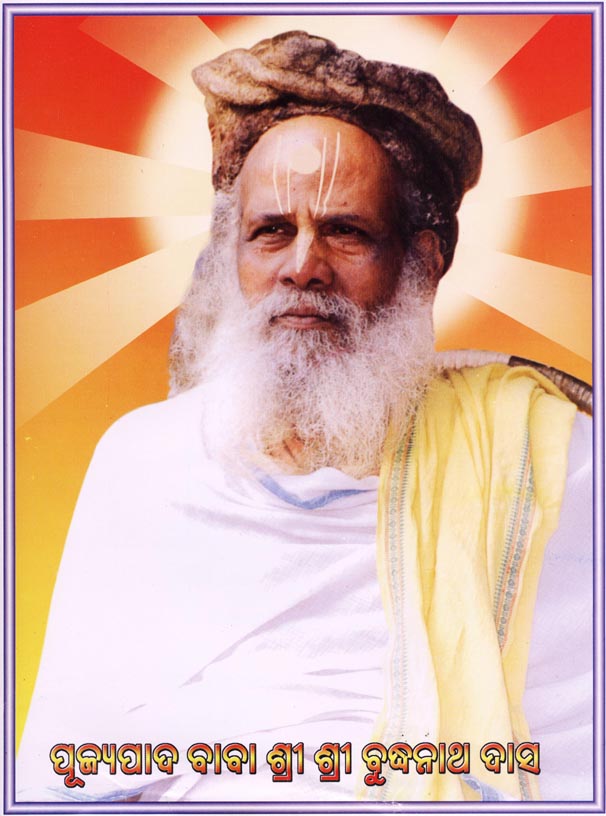
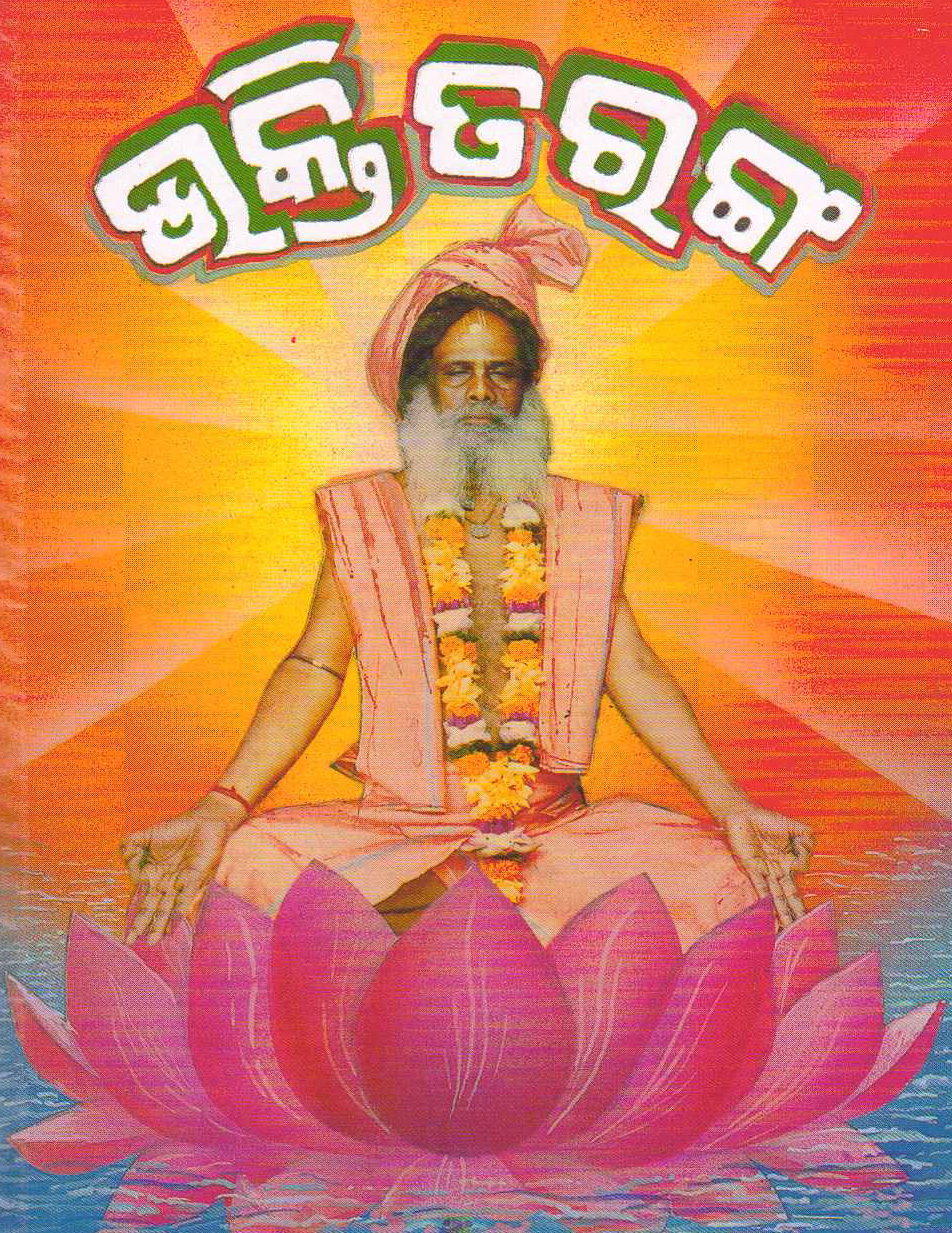
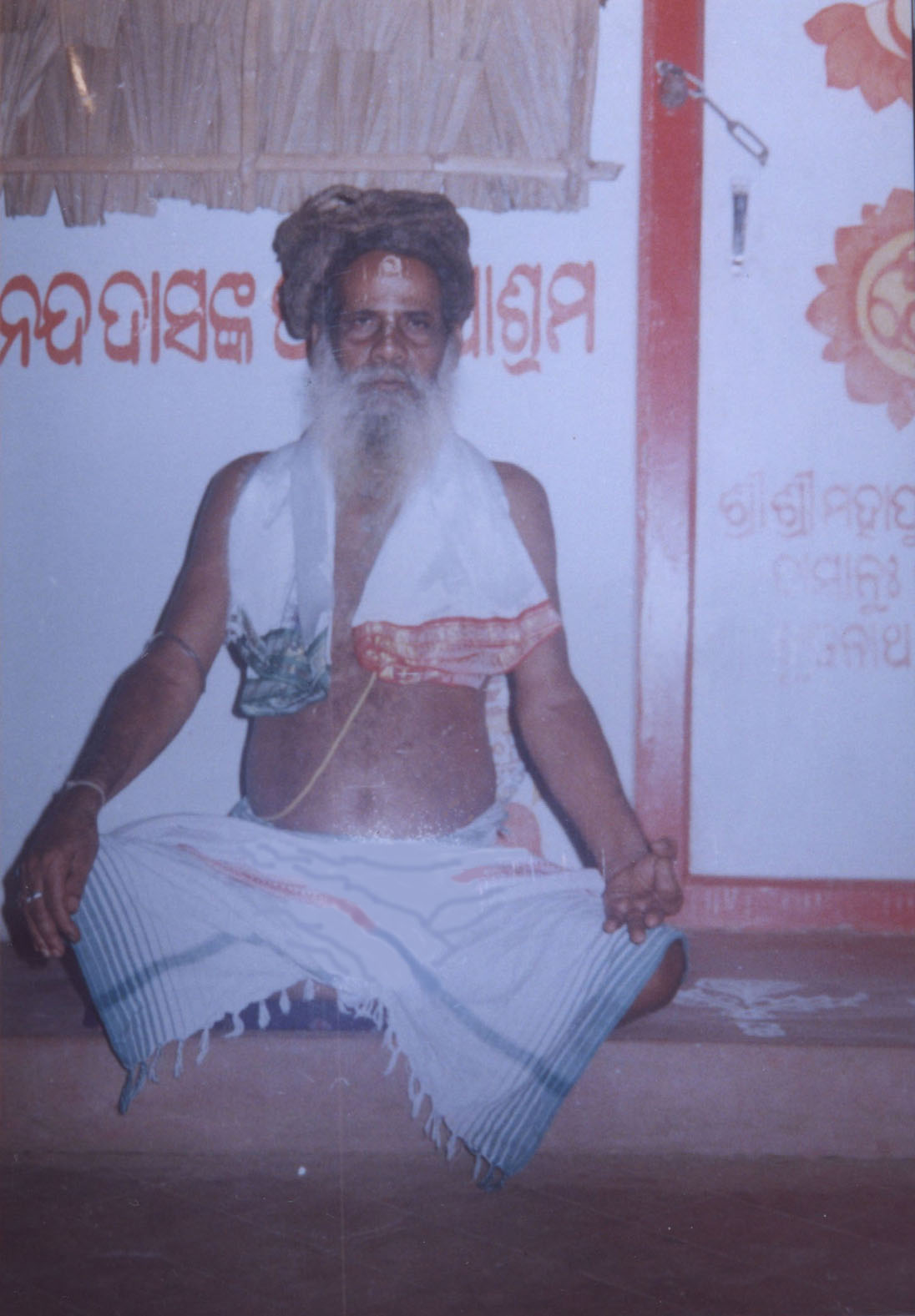
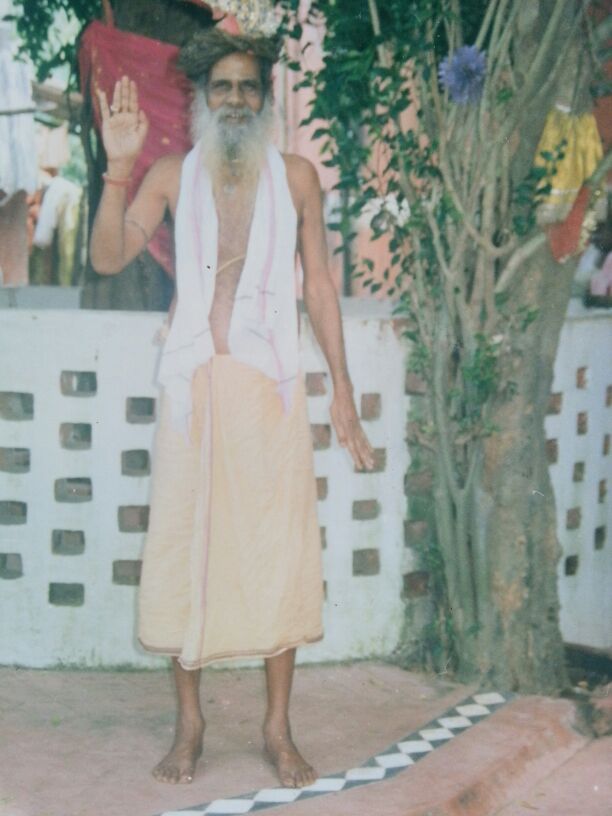
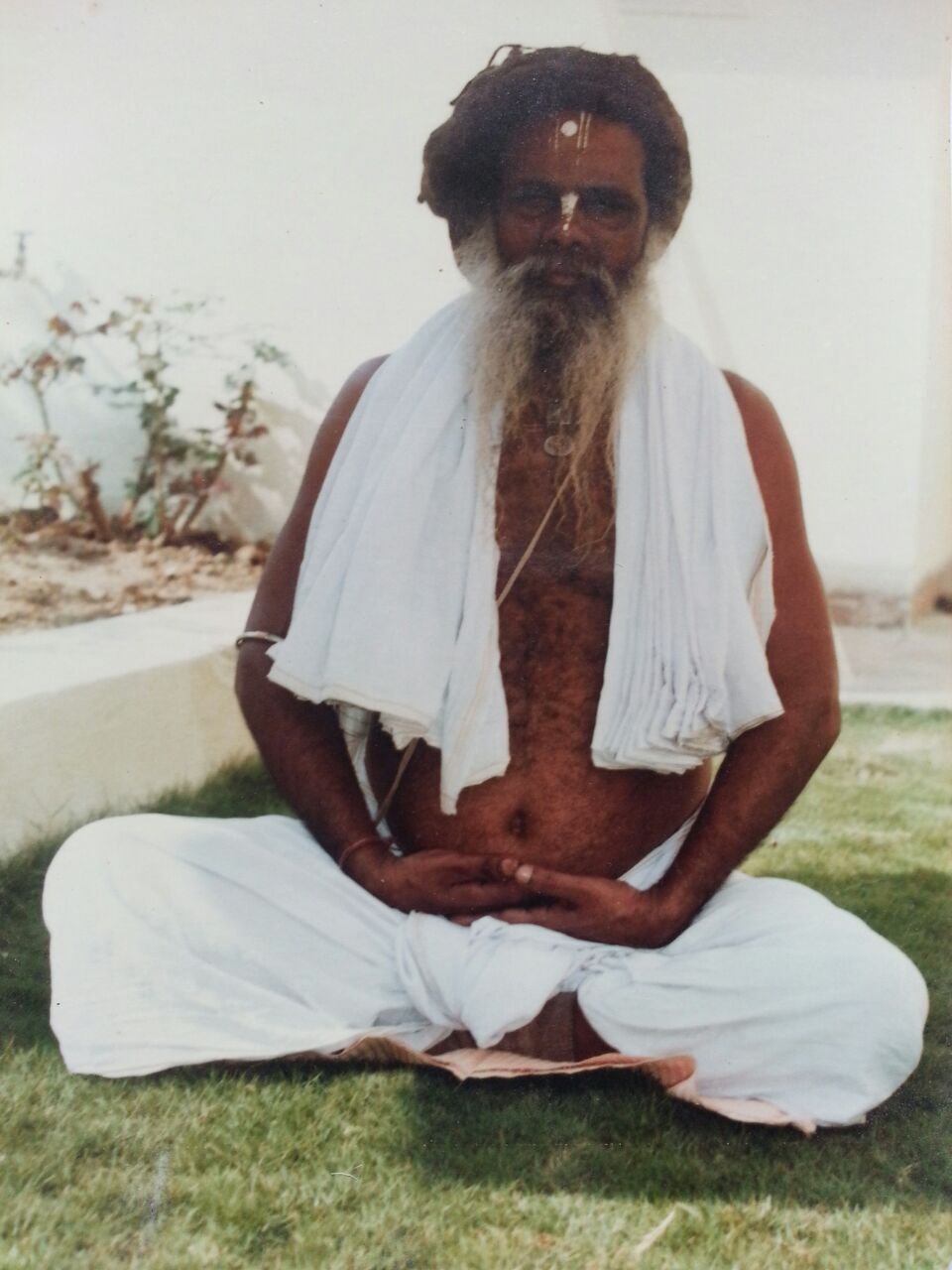
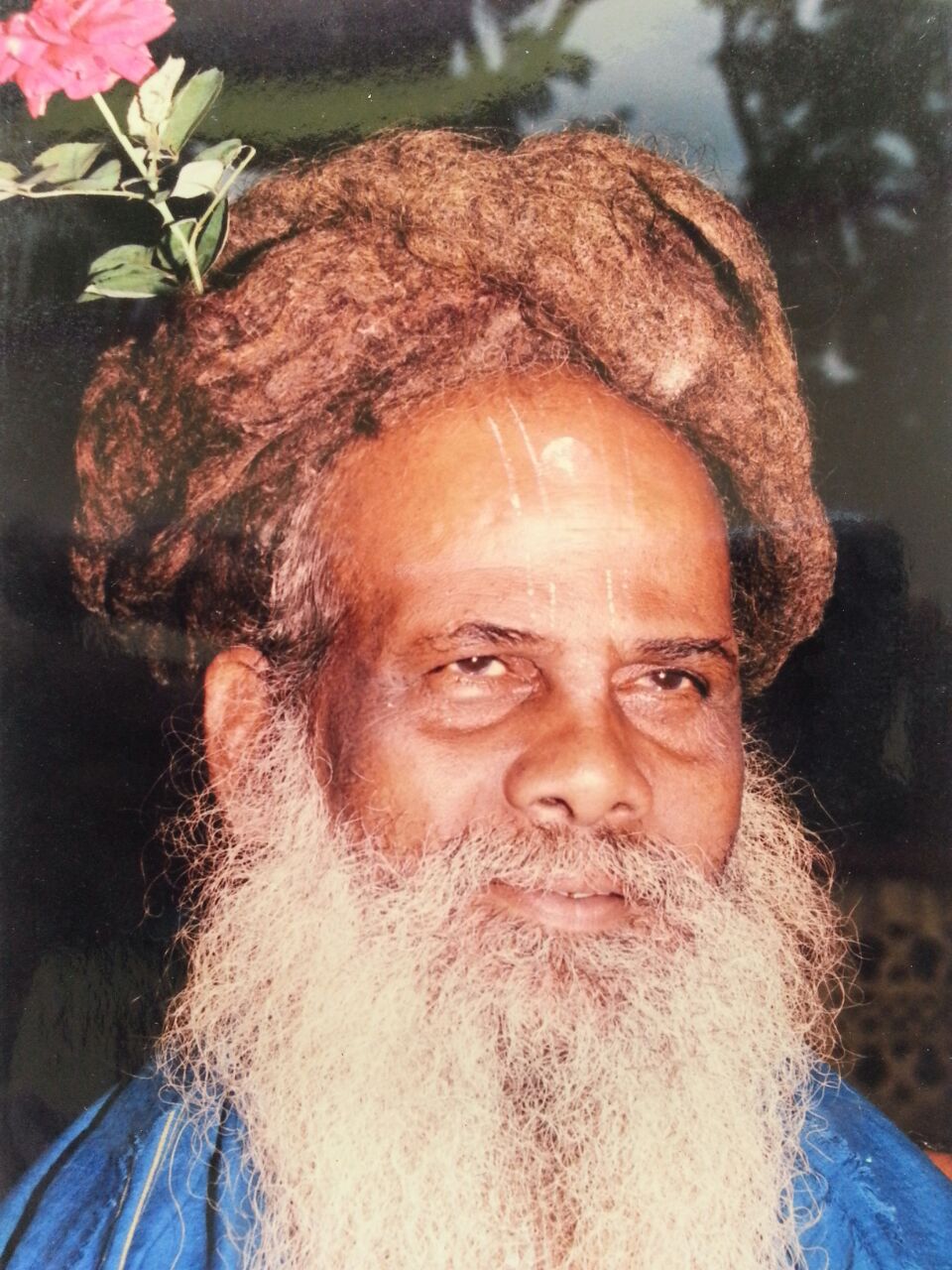
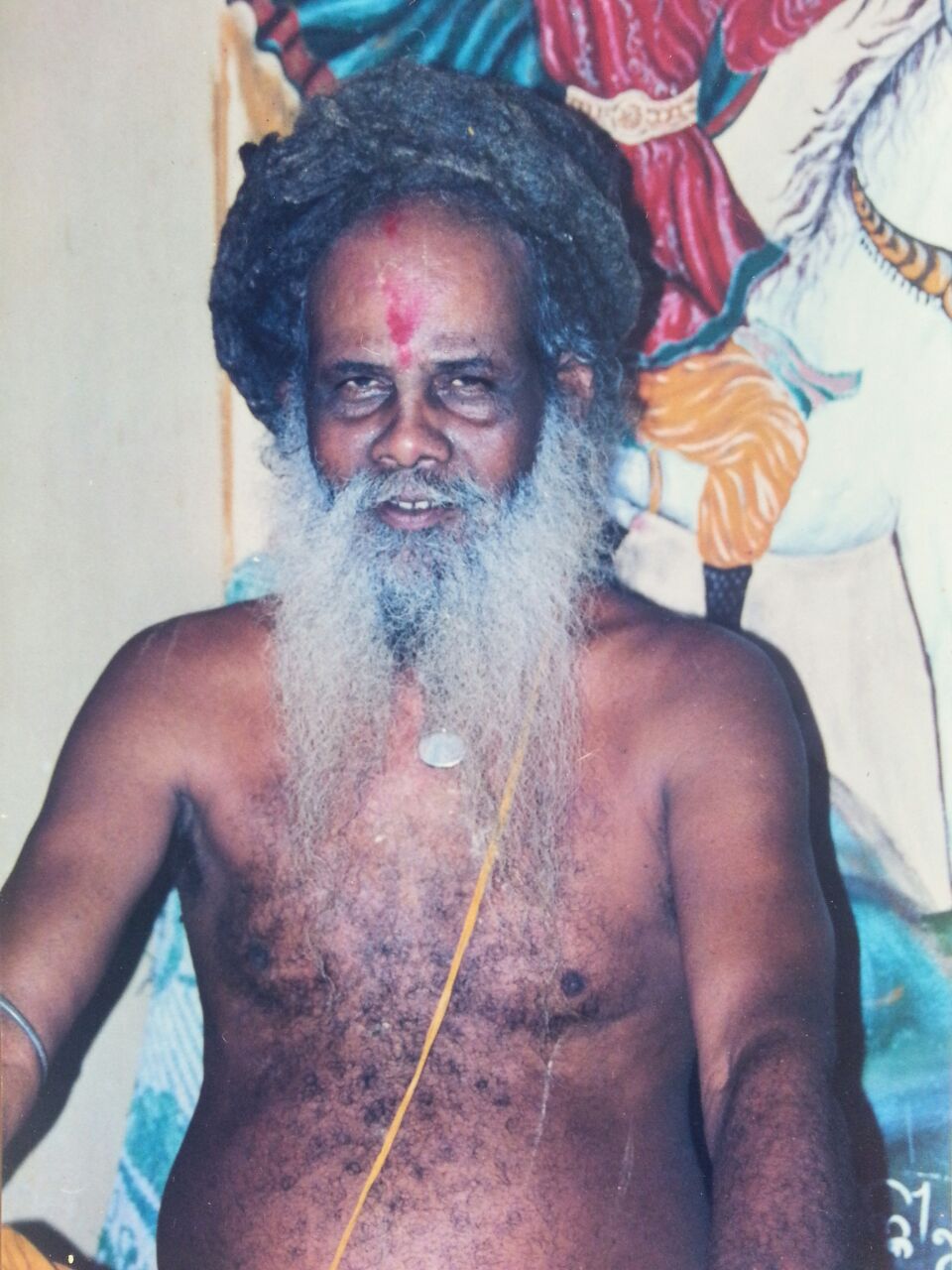
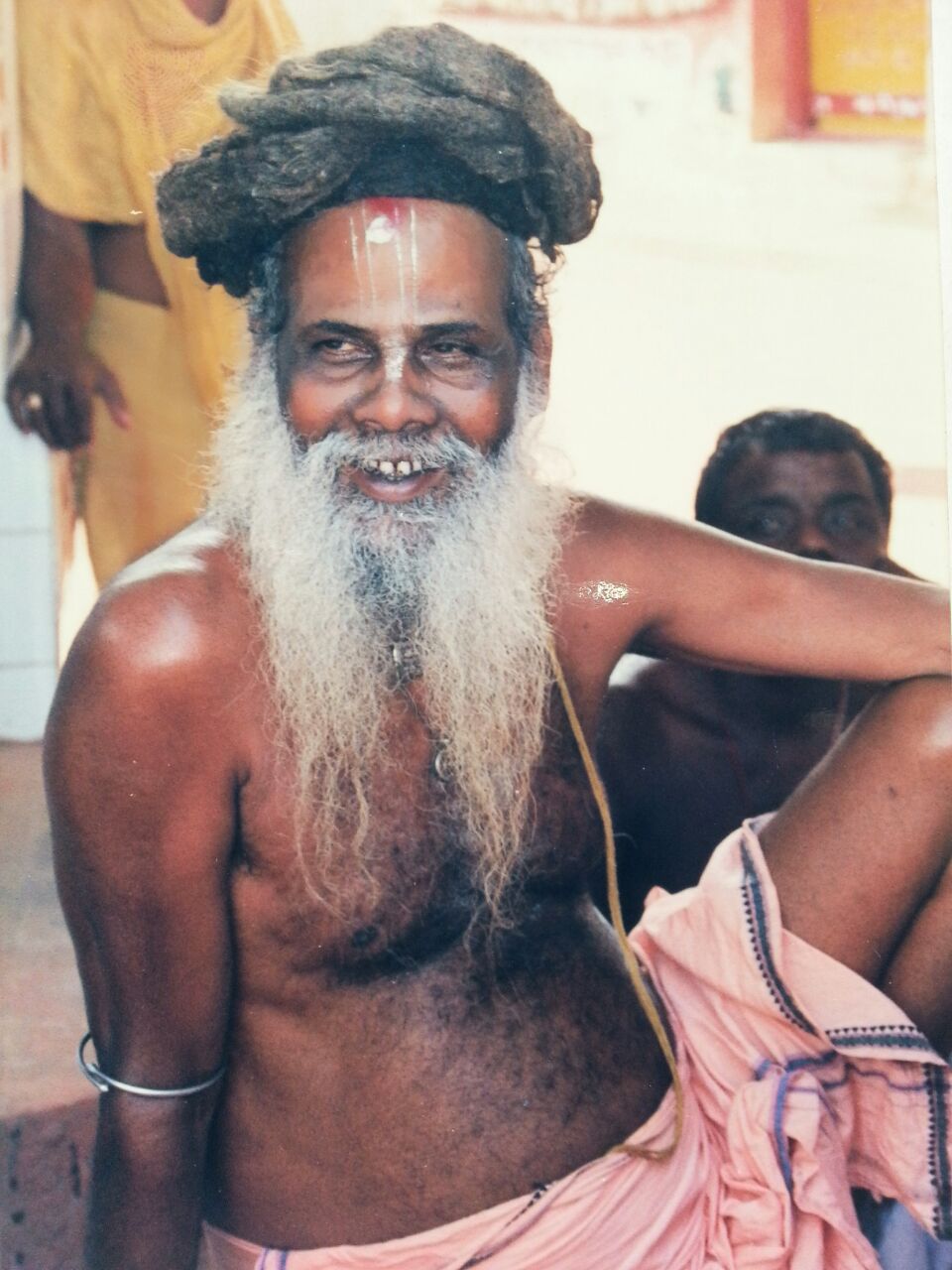
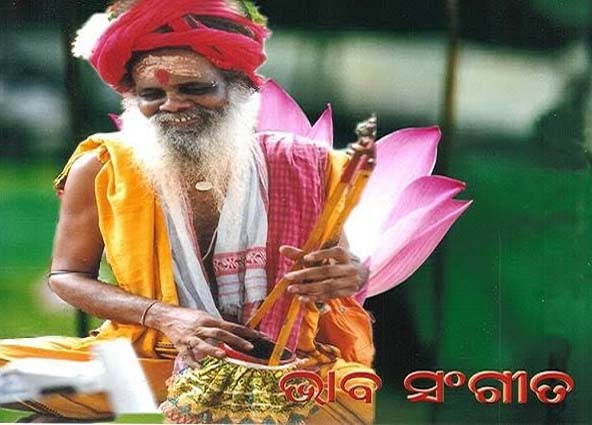
Poojyapaada Baba Shri Buddhanāth Das - Shri Achyuta Shisya Ram Das
Om Shri Gurudevāya Namah
(click on images for larger images; years:1965-2000; photo and art credits: unknown)
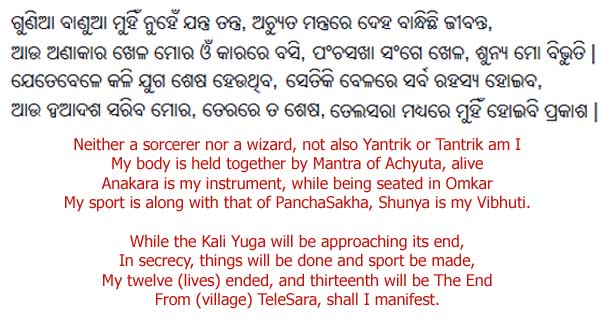
Dina Hina Muhin Arakhsita Dāsa, Bhakta Gruhe Sadā niaee Bāsa,
Dwāri Panare Dwāre Jagithaae, Āpadabele Muun Sāha Huaee je Mo Rupa Muun Agochara hee
Āu Kinkara Parāya Dina Haruthāe Bhakta Prānadhana Mora Hee ...
And the poor wretched I am Arakhsita Dasa, In devotees home I take (a place) 'Bāsa'
Like a watchman I keep vigil at the door and become savior at times of danger, My forms are unknown to me either ...
And, I spend my days like a wretched person, Devotees are the wealth and very dear to my soul ...
(full text of the song from where lines are extracted)
About 500 years back, the Orissa spiritualism and literature was immensely influenced and nourished by Mahāpurusa Sri Achyutānanda Das, Jashovanta Das, Shishu Ananta Das, Balarāma Das,
Jagannāth Das, and Arakhsita Das. The former five were popularly known as Pancha Sakhā (5-friends). His holiness Shri Arakhsita Das was not among the Panchasakha
but was a close associate and six of them were known as Sada Goswāmi (six-lords). He (Arakhsita Das) is the presiding seer of Olāsuni near Paradeep (a port town/city in coastal Orissa). While
Arakhsita Das was immersed in Samādhi,
he had a vision of a great ancient yogic soul descending from sky to the Earth, and he, following that soul, reached inside a forest and found a newly born abandoned child. He being a
Sannyāsi and without family,
handed over the newborn child to Mahapurusha Achyutānanada Das. Subsequently, the Pancha Sakha and Arakhsita Das in
Samādhi
came to know that in the 13th birth of this child (Ram Das), all their conscious (souls) will manifest through the physical body of Ram Das and he will be named as Buddhanāth Das.
He will perform the Yuga Karma (the duty of the era) of Pancha Sakhaā at the crucial period of transaction from Kali to Satya in order to re-establish
Sanātan Dharma.
Ram Das will take his 13th Birth on Wednesday in the Month of Pusha on Bakula Amavāsya (one of the new-moon days as per the Oriya calender) day in the village Telasara in
Jagatsinghpur district of Orissa, India and will be named as Buddhanāth Das. The devotees, followers and admirers believe that His Holiness Baba Shri Buddhanāth Das is the incarnation of the
former saint Ram Das and embodies the conscious of his six Gurus.
His Holiness Baba Sri Buddhanath Das took birth to father Narendra and mother Sundari. Divine characters (Kalā) were seen in the physical body of child Buddhanāth, and his miraculous and mysterious
conduct and work astonished the parents and villagers. He did not develop interest in studying in the primary school, always spent time quietly in the near by forest. Even if he was born in a rich family
of the village, he spent time like a beggar. He took the 'Sannyasa' at the age of twelve and spent nine years by begging from place to place and established Ashram at Garoi,
which is adjacent to his village and on the confluence of river Gobari and Devi. He named the Ashram as Gobardhan Pitha. Long long ago a seer had his ashram in that place. This is a place where his
Six Gurus had achieved Siddhi
under a Peepal tree which still exists. Near the Peepal tree, there is 'Siali Lata'. Sweta Bata (a Banyan tree whose fruit is white in color) and Subhadrā Daru
(Neem tree named for the Last Nabakalebara of Deity Subhadra of Jagannāth Temple, Puri are also present. All the four trees represents four
Yugas, i.e., Satya, Tretayā,
Dwāpar and Kali.
He is a Shunya Mārgi and worshipper of Nirākār Brahma, and Anākār Brahma follows from Nirākar Brahma. Shunya mārgi literally means one
who follows the spiritual path of shunya, i.e., void, Nirākār Brahma is a concept of God who has no form, and Anākār Brahma means not-of-any form (and encompasses
everything from atoms to molecules). The later two words are closely inter-related. His holiness is a
Shunya Sadhak
and is always in communion with Shunya, i.e., Nirākār Brahma, which by itself is all-compassing and all-pervading, hence, nothing in the Universe (spatial and temporal) can
elude such Sadhaks if they want to be informed about something, be it religion, science, literature, logic, or whatever existing domain of knowledge. He has conquered the Pancha Bhutta
(Sky, Air, Water, Fire & Earth elements). Experience says that, during a Rain at any place, if he wishes then no rain would take place in one particular area, even if the surrounding
places are under shower. There exits, of course, scientific (meteorological) explanations for such selective activities of drizzle, rain, shower, and virga (i.e., rain water doesn't reach the ground and
so ground is dry). But how he brings about this effect just by his will, appears incomprehensible. Similar is the case with the Wind, and the Fire. Some devotees believe that, he has the power to talk
with several persons in several rooms simultaneously and his holiness has the ability to be seated in Shunya for hours together without any interruption. He is one of the few Yogis who has
made Siddhi of 84 Āsanas.
Baba's abilities were perceived differently by people. Once while singing, he briefly explained it in passing, whose Verbatim is given below, followed by a video clip of the same:
Brahmarshi Buddhanāth Das, in front of Achyuta Pahada Ashram
Mahāpurusha has said through Tāmra pothi that my Dāsa (one who serves, i.e. Baba), leading a family life in disguise for the outside
world, does and says only that what I instruct. He never does anything without my direction. Whatever he is doing, it is by my Nirdesha (instruction). He has taken birth to save Satya and Dharma and to do
the Yugakarma. Since few years the day-of-birth of Baba is celebrated by the devotees; also is celebrated the Ekoishiaa (the 21st day after a Birthday). The 12th birth ceremony and Ekoishiā
is to be performed since in each birth he acquired one Kalā, that is the reason the Ekoishiā ceremony is performed. It is an indication
that he is having 12 Kalās out of total 16 Kalās of Lord Jagannāth.
In this life, which was his 13th birth, he was born to Mata (mother) Sunadri and Pita (father) NaraHari, in the village of
Telasarā. This was described by Shri Arakhsita Das in his literary work named as Bhāba Manjusā (PDF text,
wma audio), approximately 500 years ago. As was foretold by Shri Arakshita Das, Baba's Karma Khsetra (work place)
is at Garoi, a village at the confluence of the rivers Devi and Gobari, and Janma Khsetra (birth place) was Telasarā. Mahapurusha Achyutānanda also had described, about 500 years ago,
about Baba's birth in Parārdha Khanda (a literary work) and also hinted, among other things, in a palm leaf text kept near Tāmra Pothi,
operated by Pundit Amreswar Mishra. Following a request, Pundit Mishra narrated parts of this Sanskrit text that can be accessed by clicking here.
In his early life as a pre-initiate, when Baba was not fully aware of who he was, os so it seems, he wandered in different places, and finally as per the wishes of Shri Achyuta, he was trained in Yoga
by another realized saint named as SitāRām Das, who had an Ashram in the hills above Kamakshya. Upon completeion of his spiritual training and with instructions of Saint Sitaram Das
inspired by Shri Achyuta (Achyuta Preranā), Baba came back to Garoi (Odisha) and established a small Ashram. It is that time only, when he went to Nemāla (Shri Achyutananda Das's yoga and Samādhi Khsetra) and was
recognized, as per the scriptures, as the reincarnation of Shri Ram Das. Henceforth, following the instructions of his Guru Shri Achyuta, he led his life like an uneducated man but having the supreme
knowledge and KarmaYoga was his dominant attribute with access to the supreme knowledge.
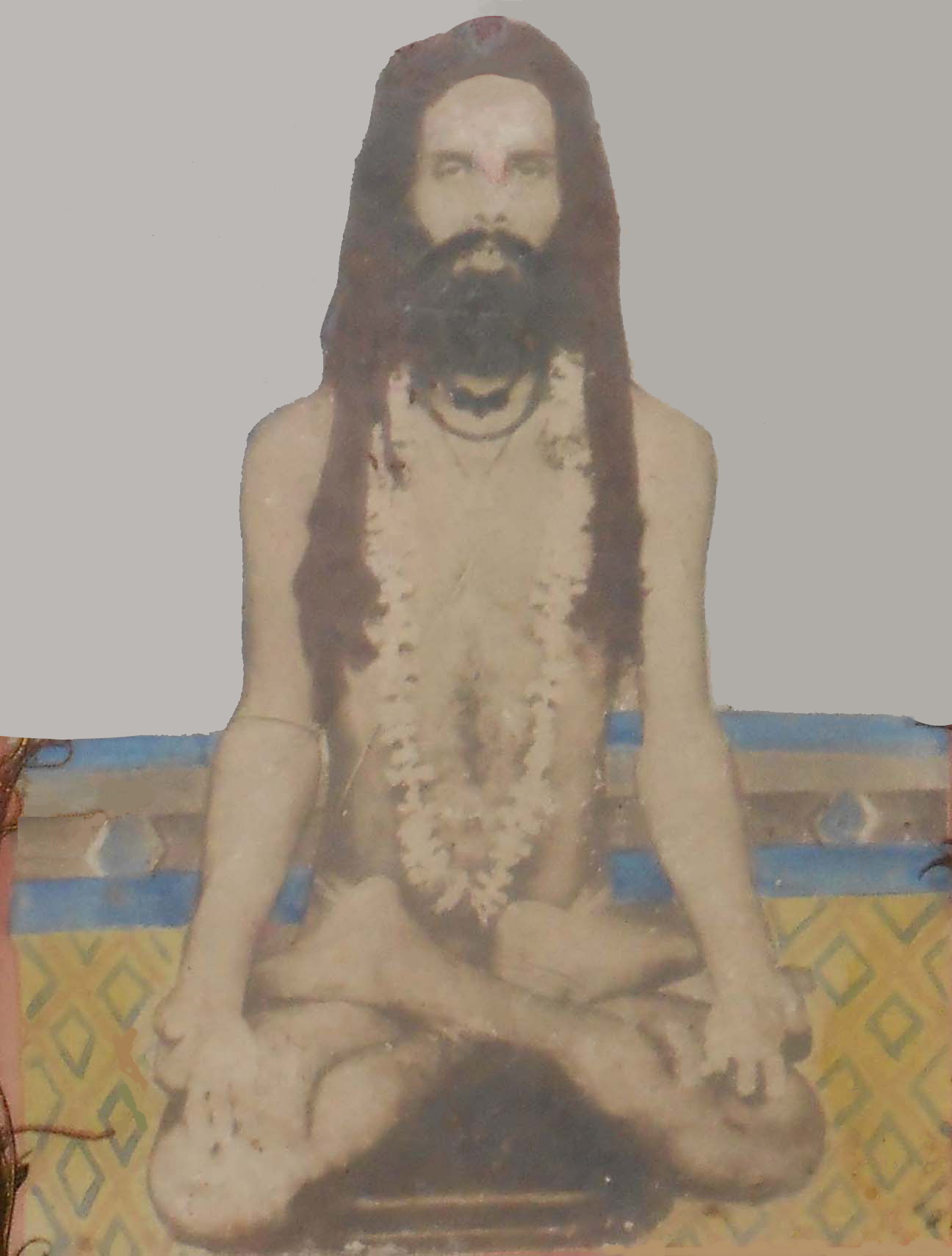
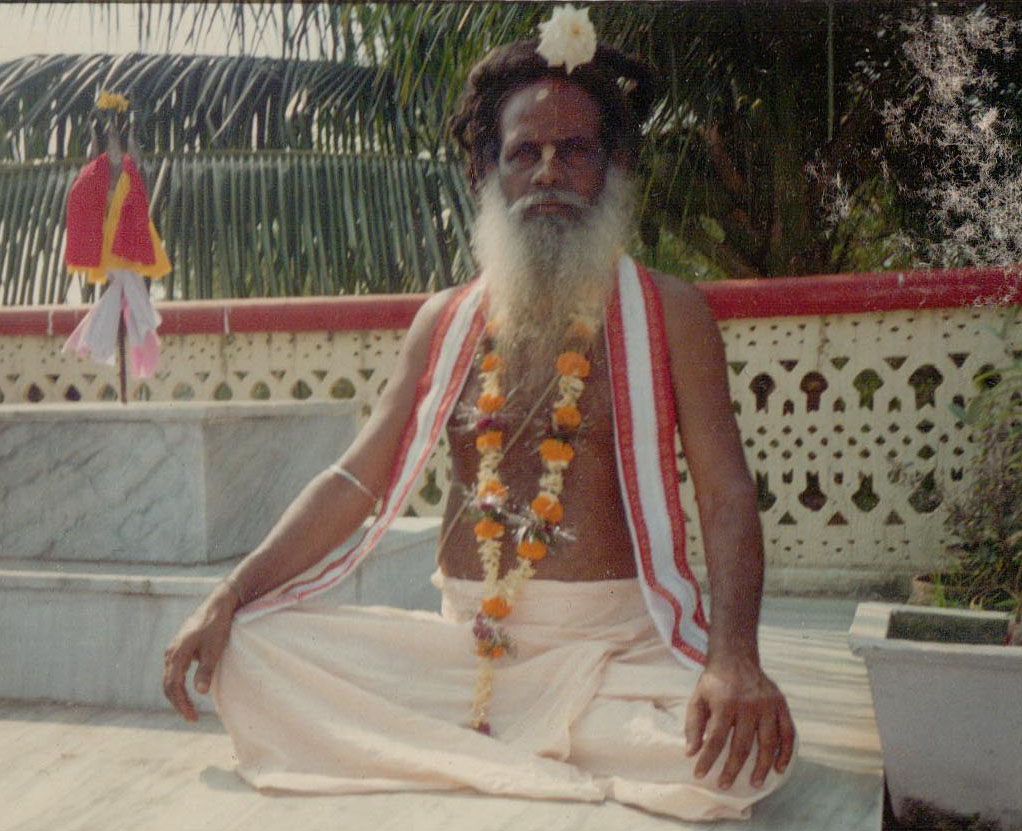
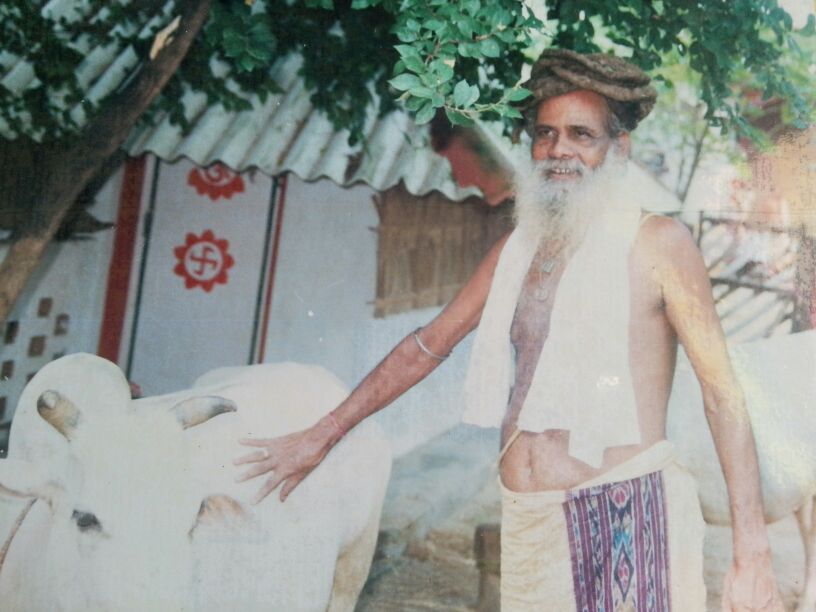
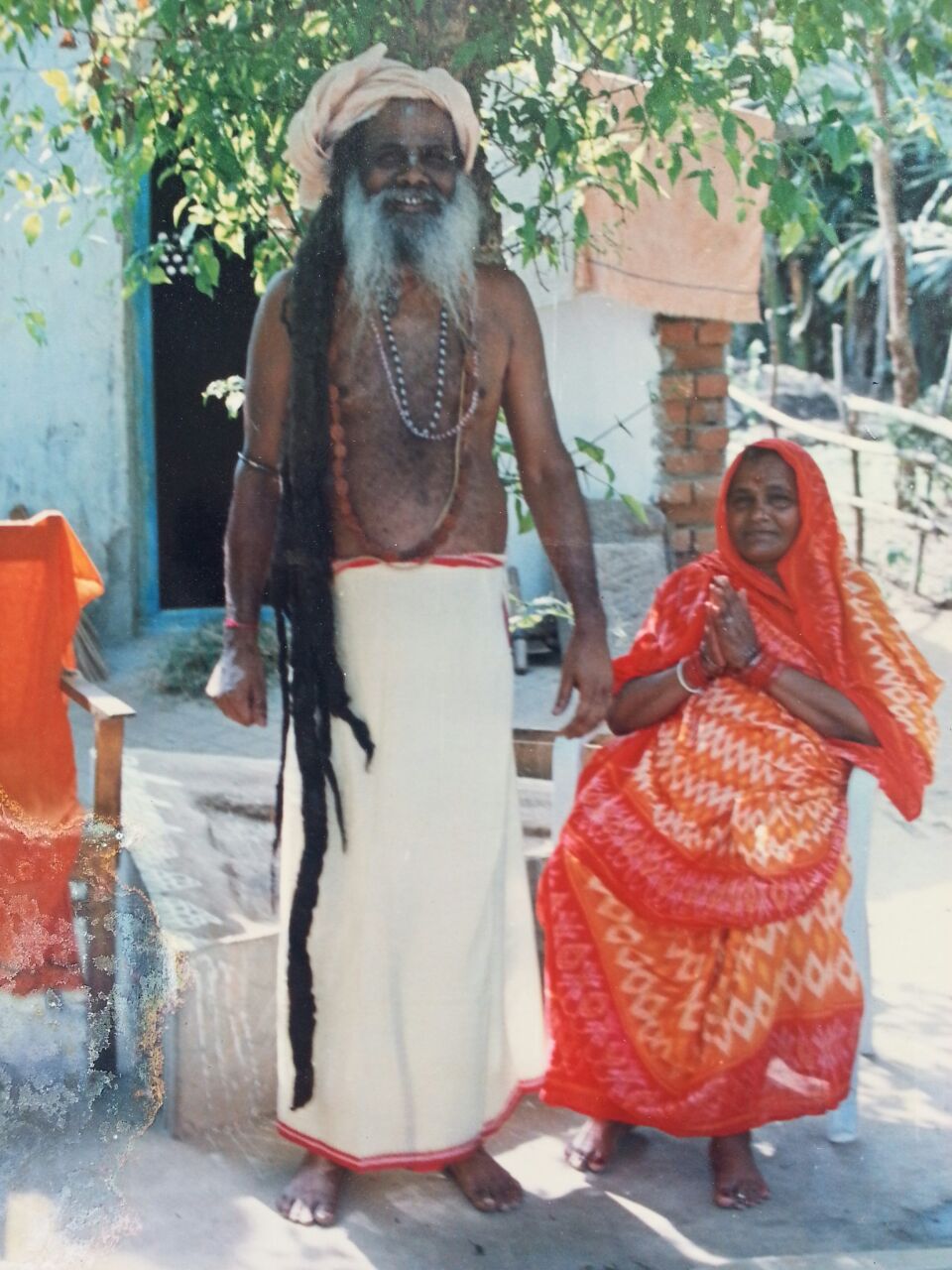
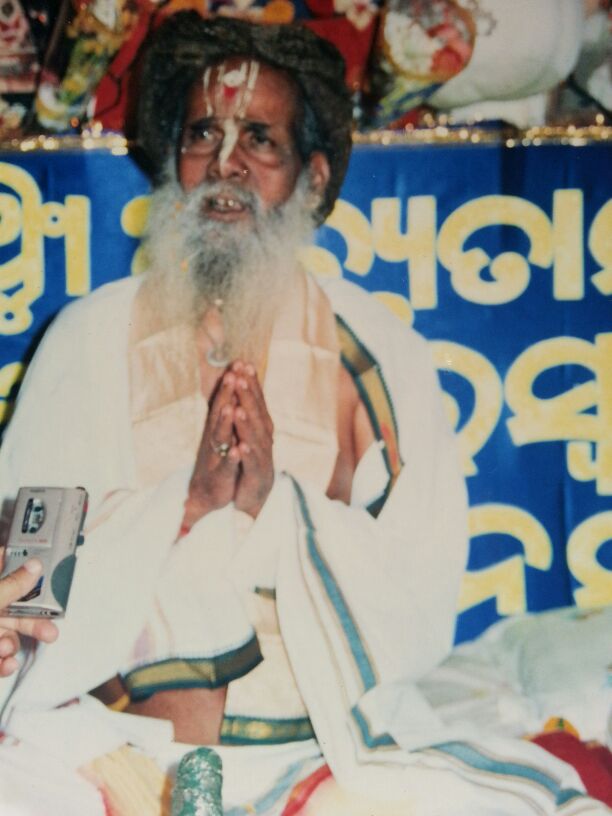
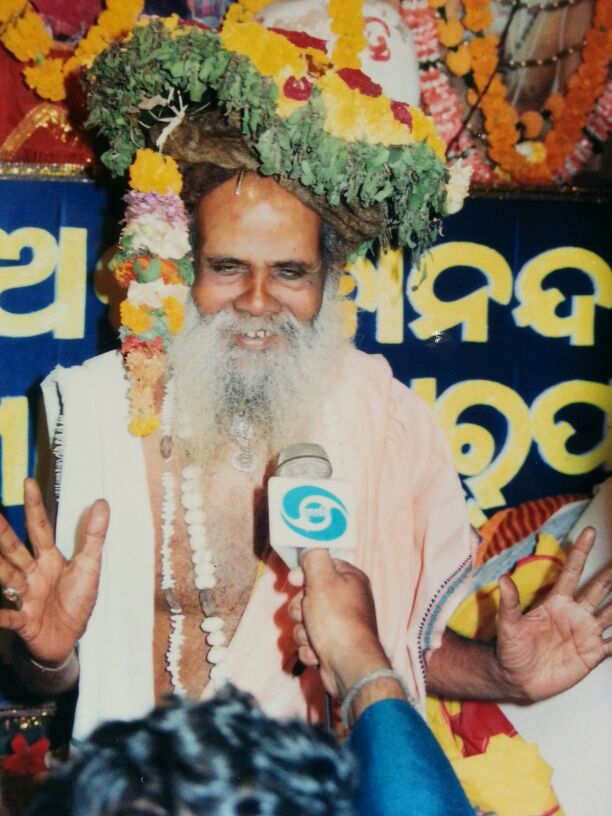
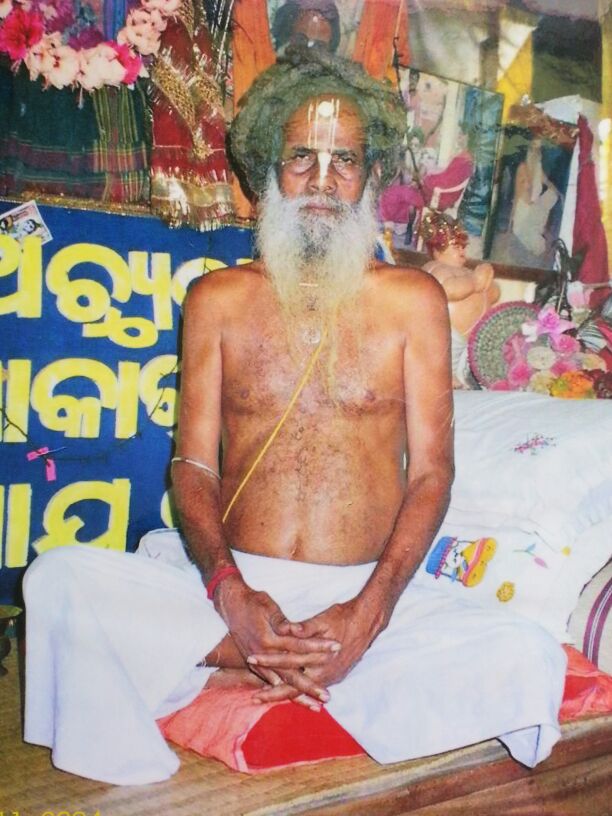
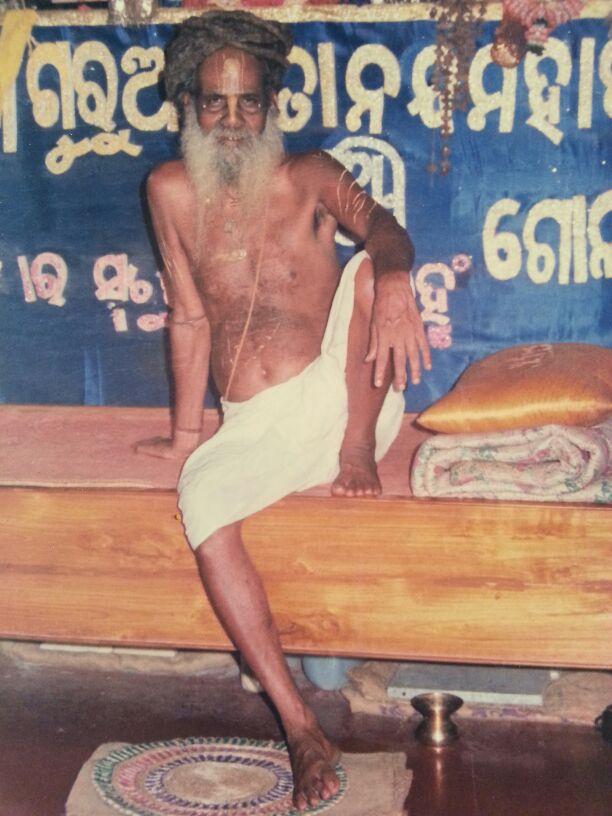
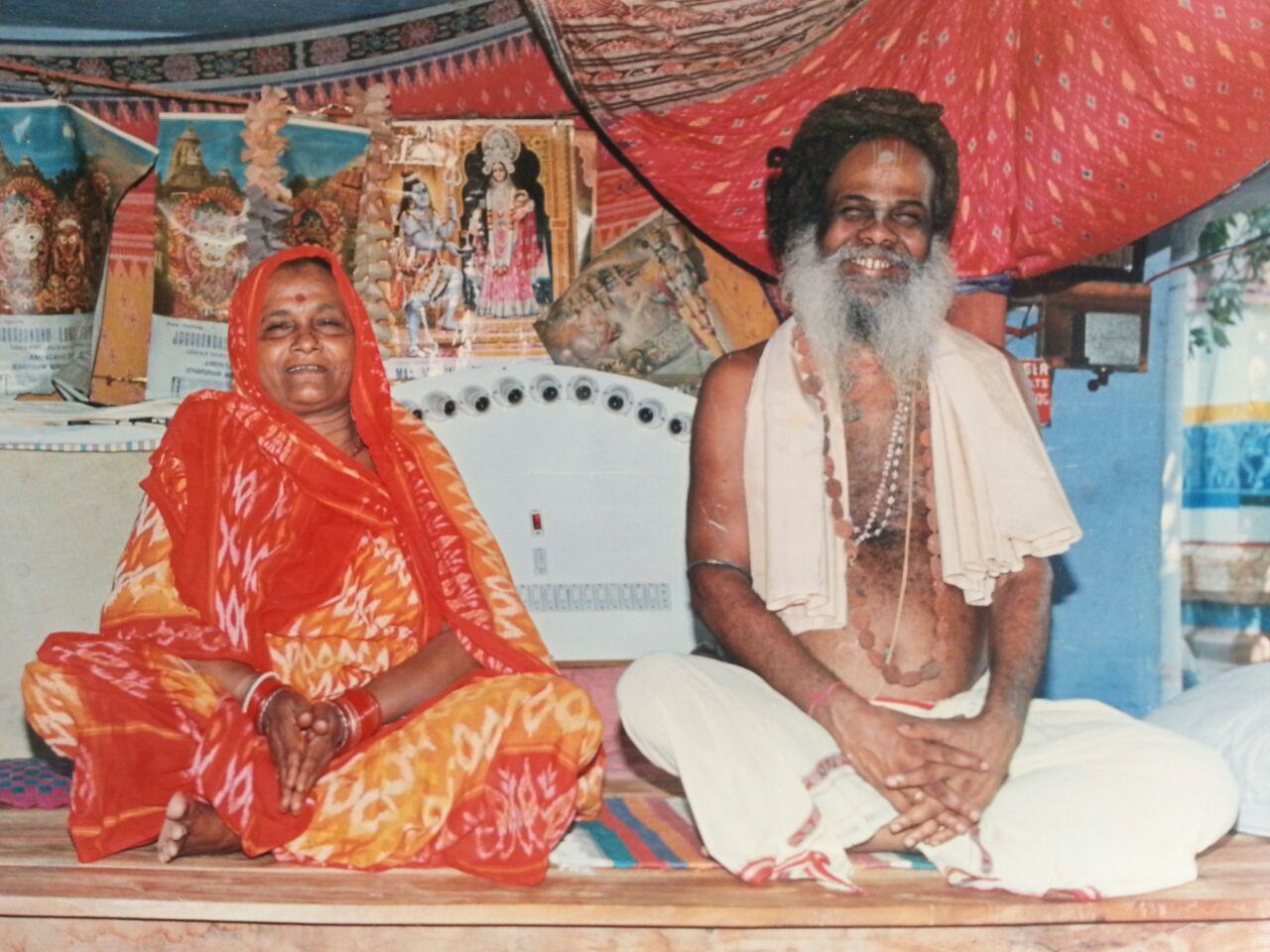
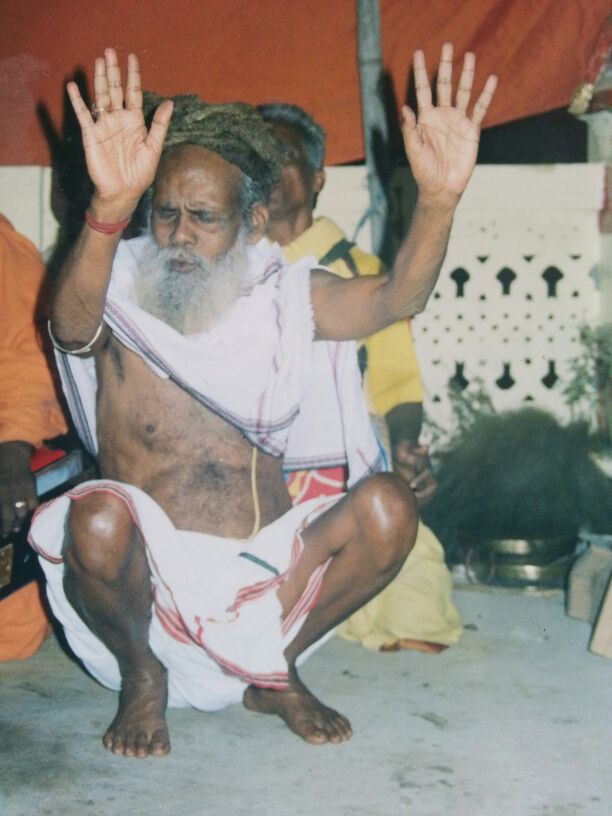
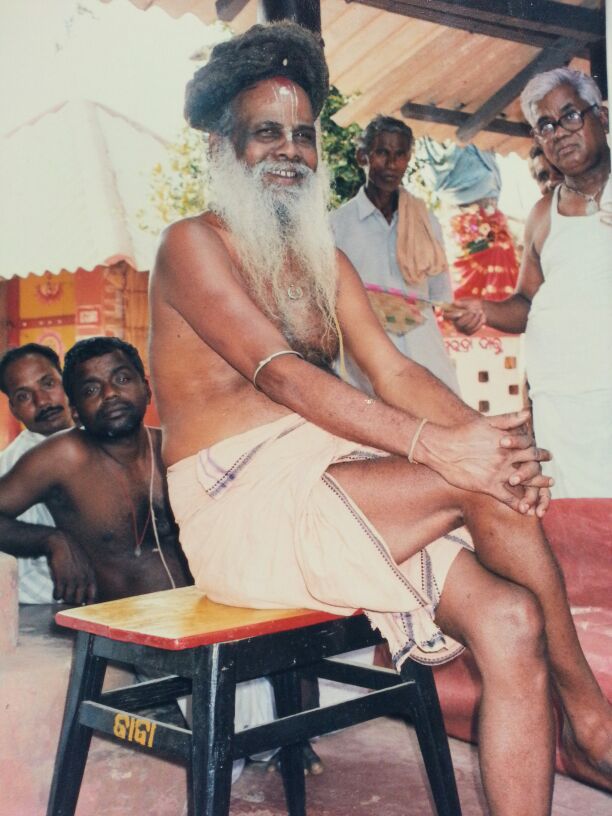
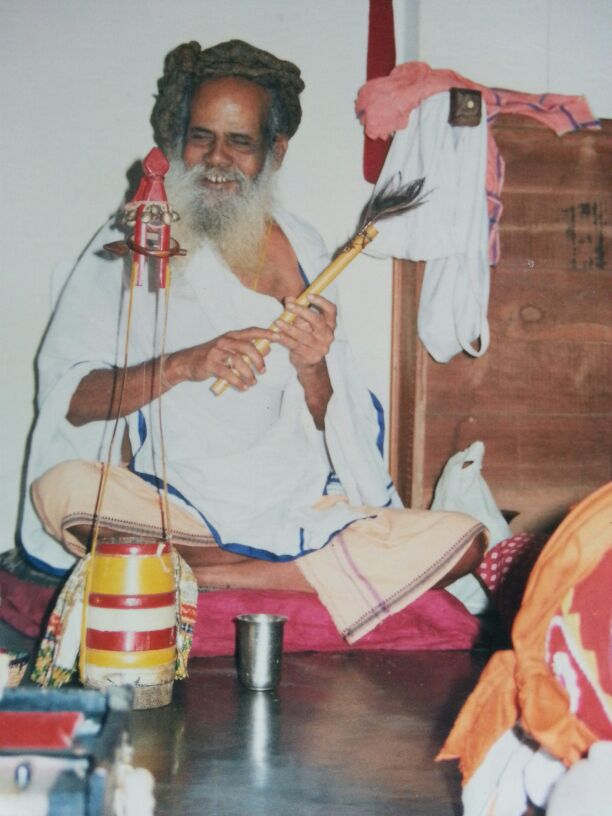
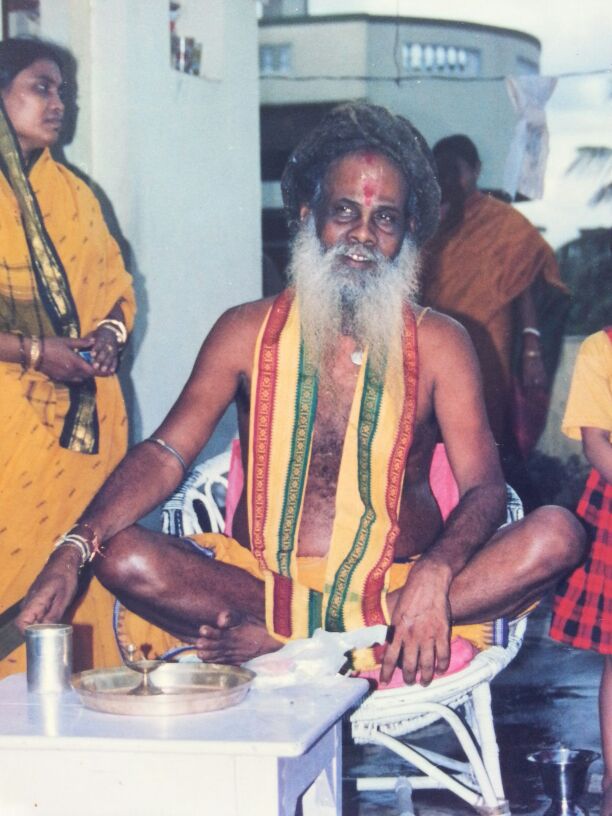
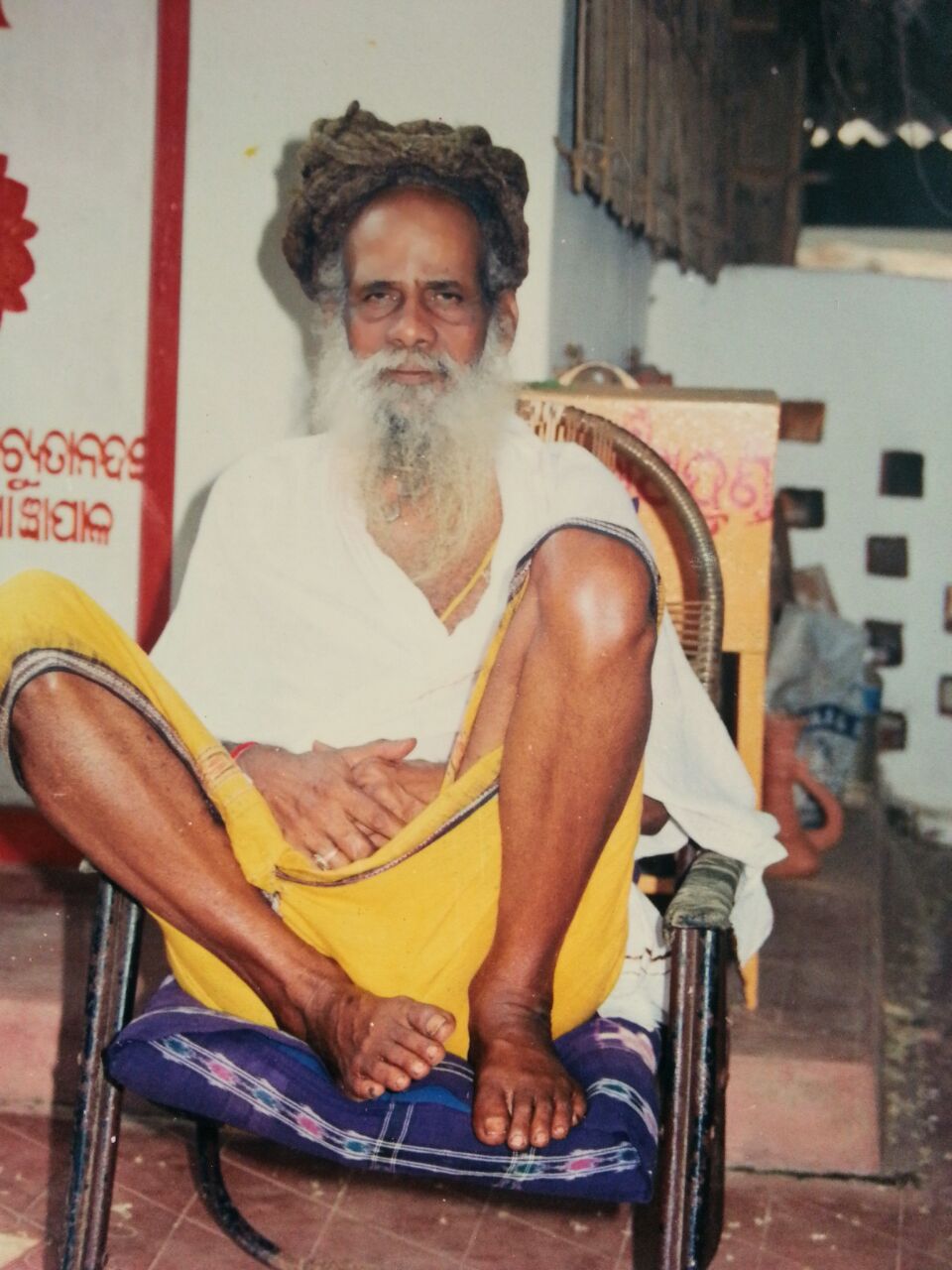
We are attempting to collect older photos of Baba, in his loving memory, and will post those in this webpage for all his admirers. If you have any photos and would like to share, please send us an email at the
address given in the contact page. This will be highly appreicated. Below are some of the older photos that we have collected.
(click on images for larger images; years:1975-2000)
He loves those who love their parents. Lord is the creator of universe and parents are the creator of human being. He preaches that the parents are the living God and they should be served, loved and
respected. They are the source of energy and blessing.
He never undertakes to change the fate of the devotee completely, even though he has the ability to do so. The Almighty leads the soul to a particular body in a particular time (for taking birth)
considering the Karma of that person. The soul while taking birth in a body is associated with small chambers (imaginary) which control the various aspects of life, e.g., finance, fame, disease,
family, spiritual advancement, life-longevity, etc. Depending on the Karma, these chambers are filled with certain amount of energy which control the various aspects. A saint can give more energy
in one chamber, e.g., disease and/or finance, by drawing energy from another chamber, but hardly from almighty God, i.e. Shunya itself. Only, in exceptional cases God's mercy pours down to bring
the energy directly from Shunya, but in most normal cases it is only a transportation from one to other chamber. Changing the energy from one chamber to another of the person will violate the direction
given by the Almighty. Hence, for the reasons stated above he never completely changes the fate of the devotee. Then the question will arise, why the devotee will pray God and/or will go to his Holiness
once he will not give the relief. Yes he can give the relief by adding will power in the mind of the devotee who is suffering and he knows how many days, months and years he will suffer. Additionally,
it is essential to meet the Siddhas to get a proper guidance, i.e. to get the direction of the path that should be followed. By getting will power he will not feel the suffering (that much) even if he
will suffer. He will be just like a drop of water floating on the leaf of the Lotus. However, the relief to various seekers vary on a personal level - depending on the devotee and the urgency of the need -
it would only be improper to generalize it.
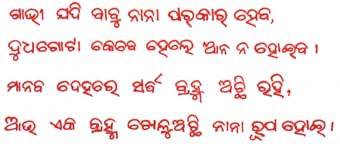
In His words,: THE SUPREME GOD IS ONLY ONE and THERE IS ONLY ONE SUPREME GOD:
No matter what the color of The Cow is,
The milk they produce has the same color;
Human body is the abode for all the 'Brahmas'
And the same 'Brahma' plays in different forms.
The same God is having and projecting several powers and abilities, and the people worship only this Supreme power in the form of a Deity of their choice, ascribed to a particular attribute. As an
illustration, Goddess Durgā has the special attribute to remove Durgati (ill fate), for which she has been named as Durgati Nāshini (destructor of evil). Praying Durg#257; is
same as praying The Almighty. Hence without worshiping several Deities one could and should concentrate on one Deity depending on the purpose and need, who could be Shiva, Krushna, Durgā, Kāli,
etc., hence he says:
Biswāsa re Uswāsa, Abiswāse Sarvanāsha
Belief in one will give relief from earthly measures, Disbelief leads to disaster
The river Ganga, looses its identity, who is vast and has numerous branches
By becoming one body after mixing with the Ocean, it ends its surfacial sport
Out of the six, spring season has all the qualities and is the chief
There is no distinction of Ganga(swetaswinee); once you hold fast the sacred Ocean
Baba had a very simple way of conveying wise messages in short vernacular poetic manner. Some of his words are given below (click here for more):
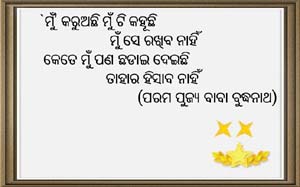
'I' am doing, 'I' am telling
Never will he allow that 'I' for too long
He smashed that 'I'ness numerous times
No one can count a list that is countless.
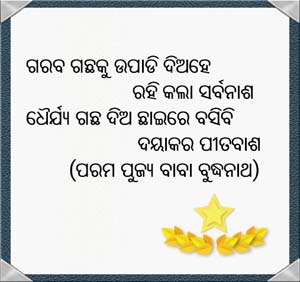
Uproot the tree of Pride
As it only brings downfall while it stays
Let me adhere only to the virtue of Patience
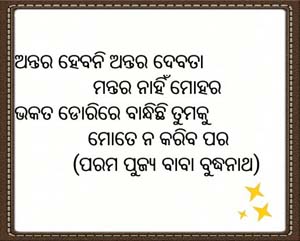
Have mercy Oh (Pitabāsa) Lord
Separate from me never, oh Lord of my heart
No mantra I know for company of yours
Devotees have bound you only by devotion
Please do not make me ever an outsider.
His holiness also, on occasions and on request, instructs through the Oracle (Tāmra and Roopa Pothis), devised by his
Guru Mahapurusha Achyutananda and currently handled by Pundit Sri Amareswar Mishra, Kakatapur, Orissa, India.